Strategic Approach to Strengthening National Asylum Systems
In its Strategic Approach to Strengthening National Asylum Systems, UNHCR sets out objectives and priority areas of engagement to support States and other stakeholders to strengthen the fairness, efficiency, adaptability and integrity of national asylum systems.
Why strong national asylum systems matter?
Quality national asylum systems are essential to ensuring life-saving access to international protection for refugees as soon as possible after displacement. They also support States in managing their borders effectively and in ensuring the swift, fair, and final resolution of applications, including the rejection of those made for non-refugee-related reasons. As a core pillar of comprehensive responses to mixed and onward movements of refugees and migrants, strengthening asylum systems in all countries, including countries of asylum, transit and destination remains a key UNHCR priority, reflected in UNHCR’s route-based approach.
“National asylum systems are the foundation of the international protection regime. Strengthening them is a legal imperative and a strategic necessity. A strong asylum system enables refugees to quickly access protection and solutions. It ensures the issuance of legal status which is essential for self-reliance and inclusion.” – Ruvendrini Menikdiwela Assistant High Commissioner for Protection, UNHCR- Ruvendrini Menikdiwela Assistant High Commissioner for Protection, UNHCR
Current challenges and way forward
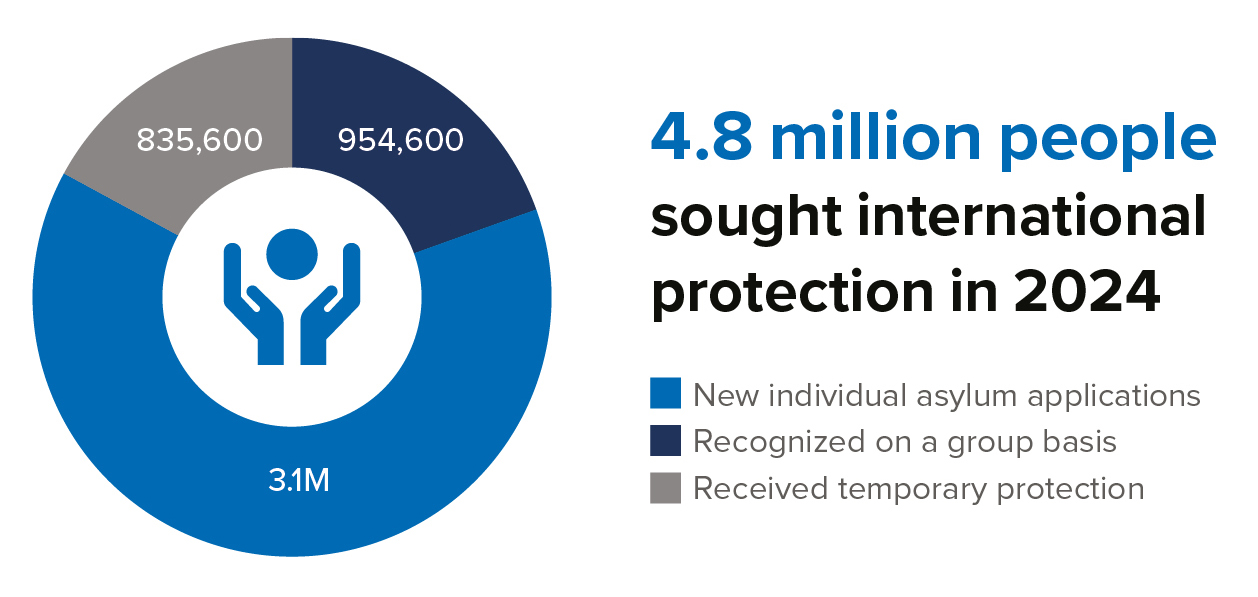
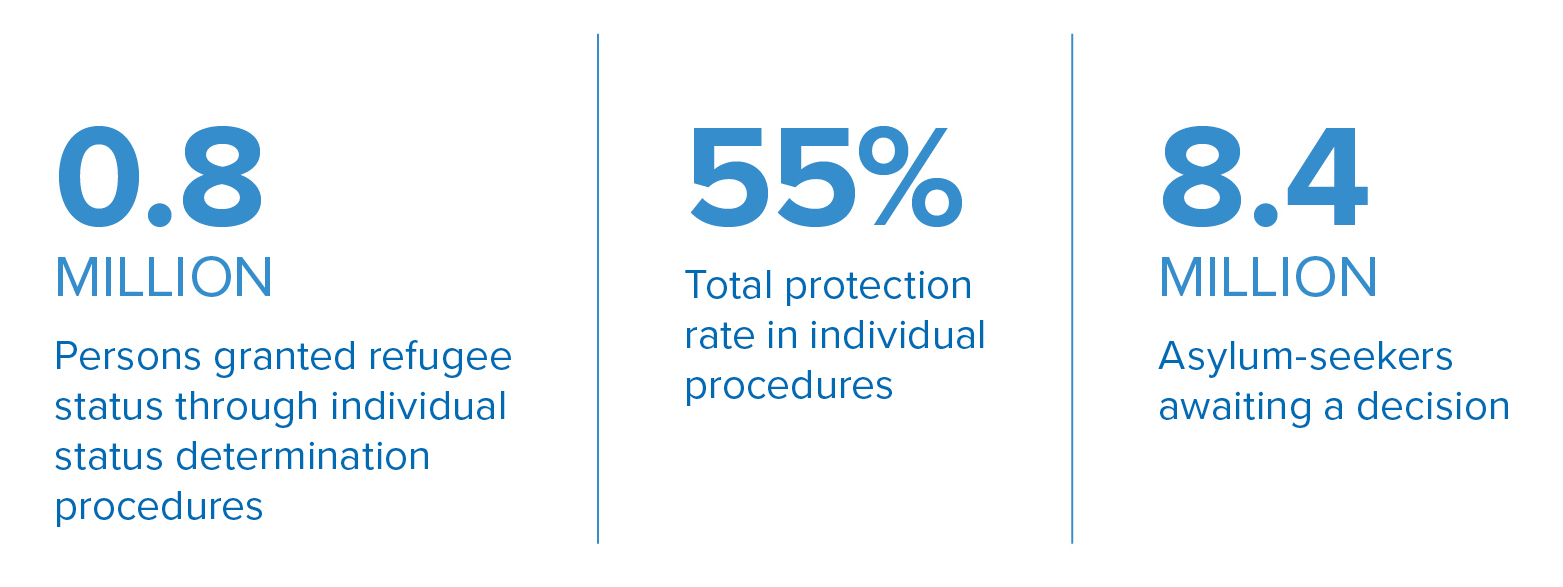
In recent years asylum systems have been under strain to effectively respond to the rising number of refugees fleeing war, violence, and persecution, as well as asylum systems being used by migrants to regularize their stay in the absence of other options. In 2024 alone, 3.1 million new individual asylum applications were registered, while 1.4 million asylum-seekers received substantive decisions. With 8.4 million people globally awaiting an asylum decision, many systems are contending with backlogs, structural challenges, and waning public and political support. These challenges are real, but experience shows they can be overcome. With strategic investments, proven approaches, and effective prioritization, asylum systems can be strengthened to deliver meaningful results for identifying and protecting refugees while addressing the concerns of States.
UNHCR’s engagement in Strengthening National Asylum Systems
In order to fulfil their international legal obligations to protect refugees, States require fair and efficient asylum procedures that enable the identification of those in need of international protection. In line with its State-conferred international protection and solutions mandate – as well as its supervisory responsibility under the 1951 Convention relating to the Status of Refugees (1951 Convention) – one of UNHCR’s priorities is supporting States to establish and strengthen national asylum systems. This support focuses on sustainably enhancing States’ capacities to implement and manage high-quality asylum procedures. UNHCR engages in a range of capacity development activities with States and other stakeholders. These include advising on legal and policy frameworks, strengthening institutional structures, and building individual competencies. Such efforts are implemented in varying contexts including where national asylum systems are only starting to be developed, nascent asylum systems, to more established systems with varying degrees of capacity. UNHCR’s National Asylum Procedures Dashboard offers an overview of the world’s asylum systems, including which countries have legal frameworks and operational systems, as well as details as to how these systems function.
View the National Asylum Procedures Dashboard
What are the main elements in the Strategic Approach?
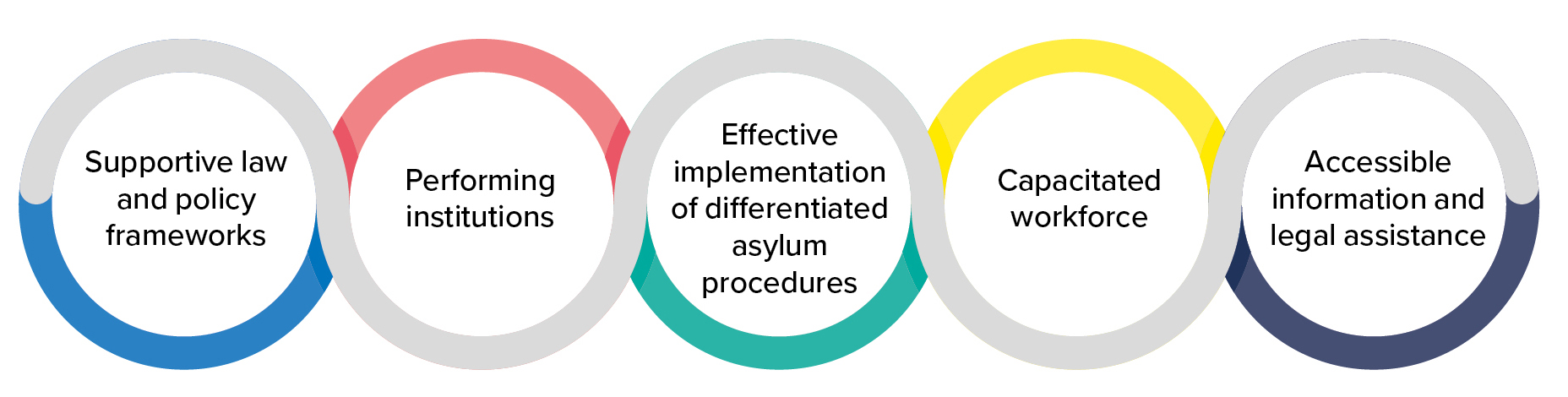
Drawing on decades of experience, the Strategic Approach sets out a framework to support States in more effectively and sustainably developing fair, efficient, and adaptable asylum systems that function with integrity. It outlines UNHCR’s role and contribution, and the requests to States and other stakeholders working to support national asylum systems, on five core areas: legal and policy frameworks; institutional performance; procedural efficiency; workforce capacity; and the meaningful participation of asylum-seekers through access to information and legal support.
The Strategic Approach promotes policy innovation by ensuring that systems are sufficiently strong for States to explore creative and context-specific solutions that improve the fairness and effectiveness of the asylum process, ensuring that systems remain adaptable and resilient in the face of shifting dynamics and rising pressures. The approach emphasizes the need to apply a capacity development approach, ensuring holistic reform across legislative, policy, institutional, procedural and functional dimensions which is based on evidence and focusses on a long-term and sustainable response to ensure that asylum systems are fit for purpose. It is grounded in a whole-of-society model and calls for the enhanced engagement of governments, civil society, communities, and development actors.
The Strategic Approach positions reinforcing asylum systems as part of a broader, coherent and coordinated response to mixed and onward movements. This reflects UNHCR’s route-based approach to addressing mixed movements which calls for a set of key actions including the need to strengthen asylum systems in all countries, including countries of asylum, transit and destination.
To operationalize the Strategic Approach, UNHCR plans to undertake several enabling actions to support States and other stakeholders. It will reinforce its role as thought leader on asylum issues; enhance its capacity to deliver structured, sustainable, context-specific interventions using the capacity development approach; and explore the use of technology for early collection and protection-sensitive use of data and innovation. The Strategic Approach promotes multi-stakeholder advocacy and action, encouraging cross-sectoral learning, knowledge exchange and engagement with a wide range of actors, including development partners.
By demonstrating/recognizing that protection, solutions and effective border management are mutually reinforcing, the Strategic Approach enables States to deliver on all these priorities.
Introducing the Asylum Procedures Toolkit
The Asylum Procedures Toolkit is UNHCR’s new online resource to support the implementation of the Strategy on Strengthening National Asylum Systems.
What the Toolkit offers:
- Provides practical guidance across five strategic areas of the strategy—legal frameworks, institutional performance, procedural efficiency, workforce capacity, and asylum-seeker participation.
- Supports States in responding to evolving challenges, including mixed movements, by offering innovative approaches aligned with UNHCR’s route-based strategy.
- Promotes the exchange of good practices, experiences, and lessons learned and contributes to a growing body of knowledge on effective asylum system development.